QQivo

Plan the work, and see the delay coming.

Qivo is a product-development planner for teams of humans and AI agents. You break the work into tasks, hand each one to whoever will do it, and the roadmap tells you — against everyone's real capacity — whether it will actually be done in time.

$1 per user a month.

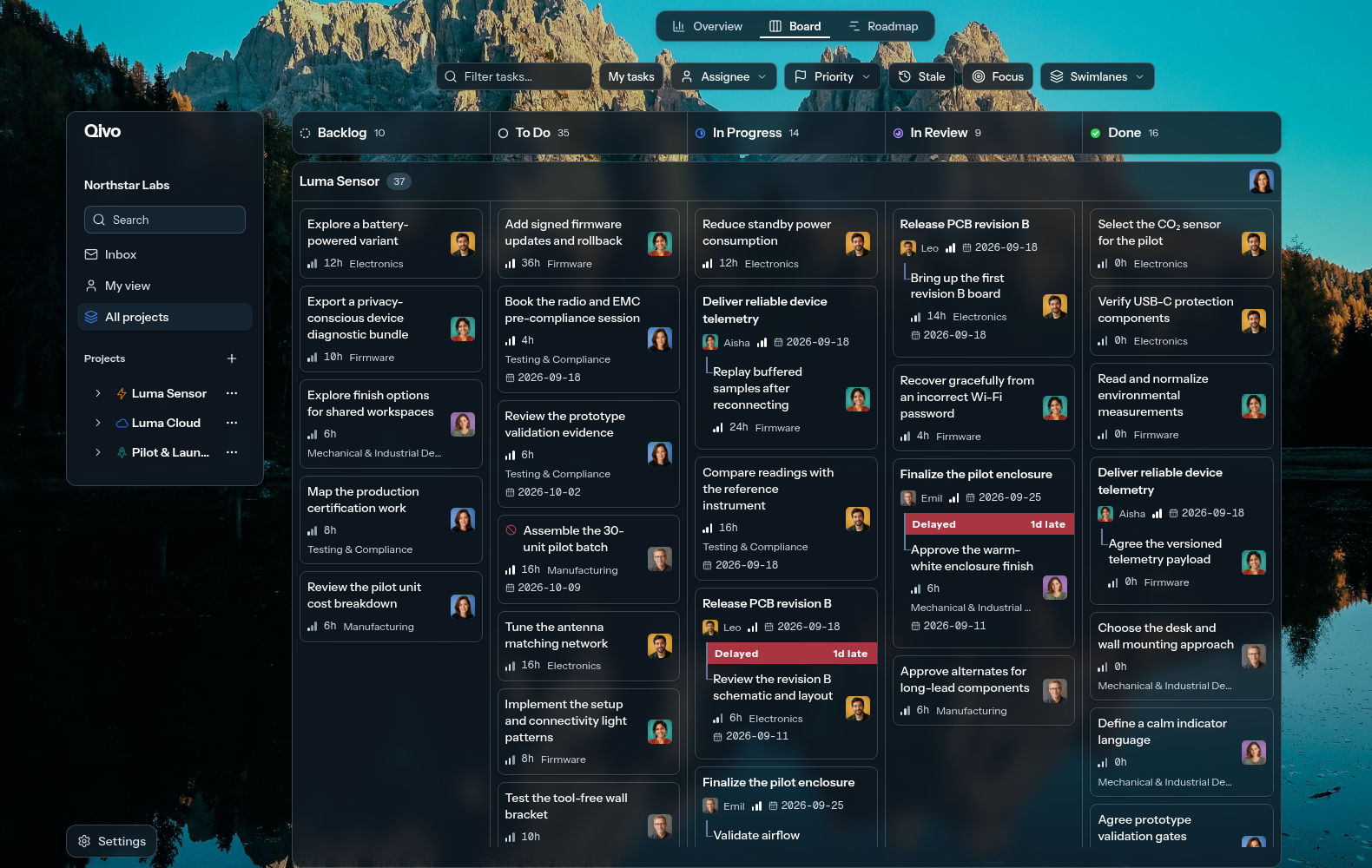
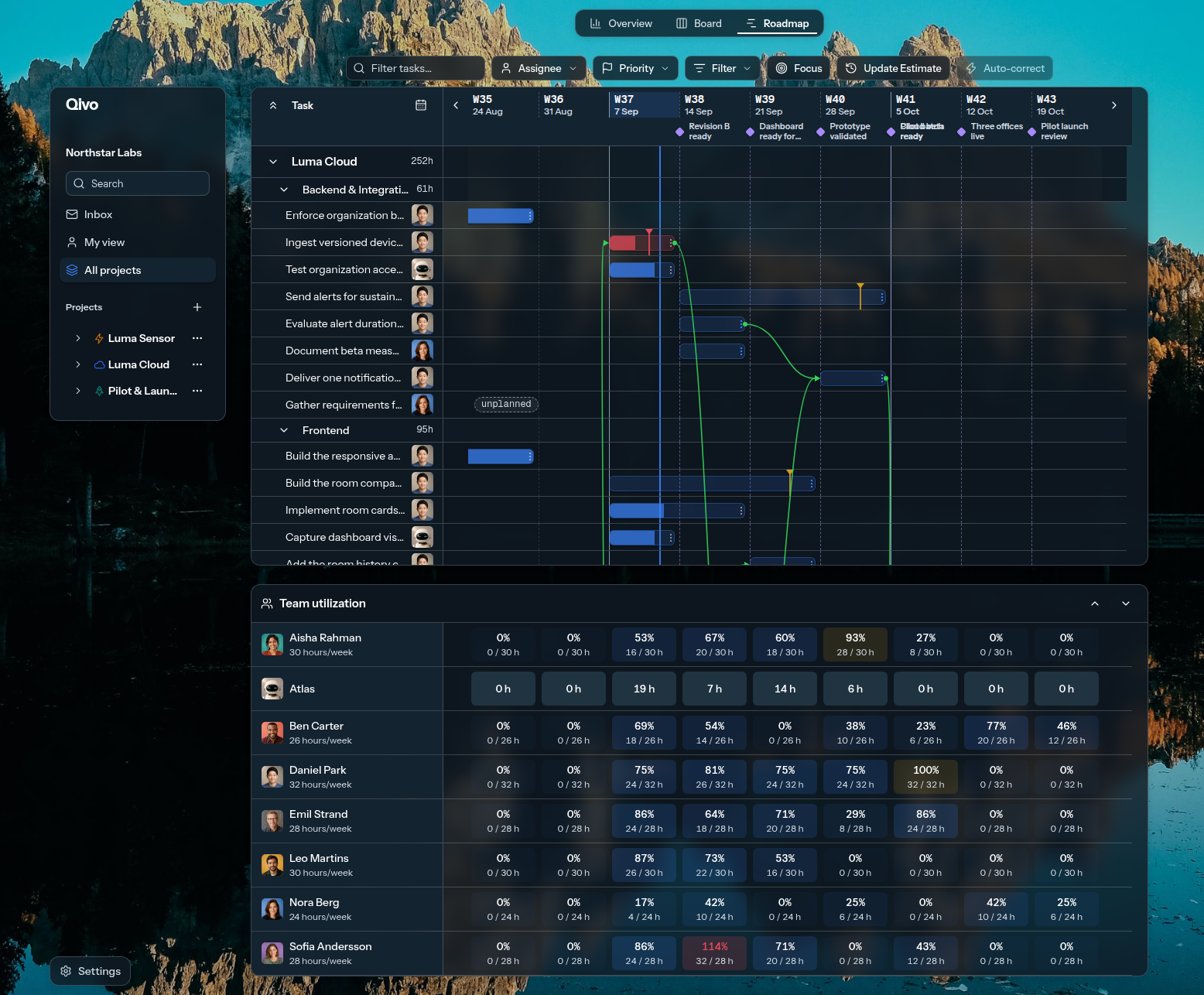
Kanban board Week-grid roadmap Capacity per person Projected delay status REST API + MCP Cross-company guests

Your roadmap tells you the future, not the past.

Most tools flag a date after it has been missed. Qivo walks each task's remaining hours through its assignee's real free capacity — across everything they are assigned to, organization-wide — and colours it green, yellow or red by whether it is projected to land in time. Every estimate is a timestamped measurement, so the colour degrades when the numbers stop fitting, not merely because a number got old.

Capacity that cannot disagree with the plan

Workload is derived live from the tasks themselves. Drag a bar on the roadmap and watch that person's weekly load boxes renumber and recolour. There is no separate allocation grid to keep in step, because there is no separate allocation grid.

Plans that cannot lie

A planned end past the due date is rejected. A parent bar always covers its children, enforced in the database rather than in the form — so an API write cannot get around it either. Auto-schedule cascades dependency fixes and refuses to "solve" an impossible cycle.

Busy, not exposed

A confidential project stays invisible to people without access — and its load still counts, anonymously, in every capacity view and every projection. Honest numbers and kept secrets, at the same time.

Links that never die

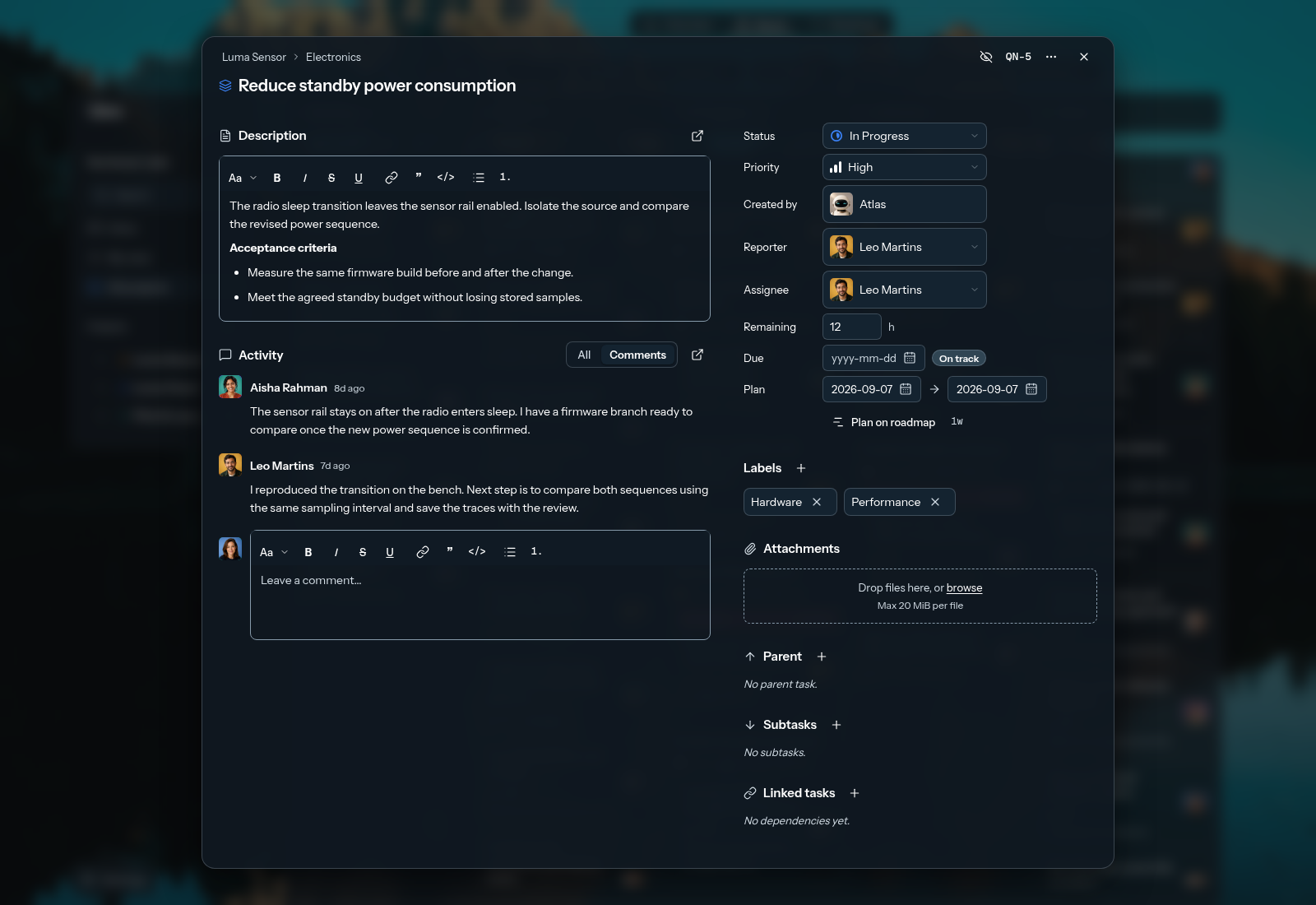
One task-number sequence per organization, assigned at creation and immutable for life. Move a task anywhere you like: the ID, every link and every reference to it survives.

Weeks that mean something

Your organization defines its own first workday and week-numbering rule, and the entire planning grid follows. Planning is deliberately week-granular, because day precision at a six-month horizon is fiction.

A board that shows relationships in place

Hover any card and its whole dependency neighbourhood lights up with directional labels. Neglected tasks visibly fade with age instead of quietly sinking down a backlog.

AI with your permissions, not a bot's.

Qivo has two machine interfaces and one access model behind both. An agent is a user — it has a name, a picture, project roles and a place in the activity feed, and the only thing that differs is that it signs in with a key. So least-privilege automation is the same mechanism as least-privilege people, not a second one to maintain.

An MCP server where the token is you

Point your assistant at Qivo with your own token and it sees exactly what you see and writes exactly where you could. Its writes are attributed to you, "via MCP".

Automation labelled as automation

Every automated write says where it came from in the activity feed — which agent, or which person's assistant. Human, script and AI stay distinguishable instead of collapsing into one generic bot user.

Read-only keys are a role, not a plan

An agent can be a viewer: it signs in, reads the projects it was added to, and writes nothing. That is what a reporting or dashboard integration should have, and it costs the same as any other user.

Outsiders, without a lobby or a mode.

Invite a client or a contractor by email to exactly one project. They get the real product there — tasks, comments, planning, at whatever role you gave them — and nothing else of your organization. On their side it simply appears in the sidebar they already have, under a small header naming you. No cut-down client portal, no organization switcher to get lost in, and none of your seats spent.